


In a world driven by AI, startups, and constant innovation, staying ahead isn’t just about having a great idea—it’s about knowing what already exists.
That’s where patent databases come in.
Whether you’re a student, job seeker, or working professional, understanding patent databases in 2026 can give you a serious edge. These platforms help you explore inventions, track competitors, and even spark new ideas.
From tech giants racing to file AI patents to startups protecting their innovations, patent data is everywhere—and the ability to use it is becoming a valuable career skill.

What Are Patent Databases?
Patent databases are online platforms where you can search and access information about inventions that have been legally registered.
What kind of information do they contain?
- Details of inventions and technologies
- Names of inventors and companies
- Filing and approval dates
- Technical diagrams and descriptions
- Legal status of patents
Who uses them?
- Researchers and scientists
- Companies and startups
- Data analysts
- Intellectual Property (IP) professionals
- Job seekers exploring tech and innovation trends
Think of them as a massive library of human innovation.
Why Patent Databases Matter for Careers in 2026
Patent data isn’t just for lawyers or scientists anymore—it’s becoming relevant across multiple career paths.
1. Data Analytics
Patent databases are full of structured data. Analysts use them to:
- Spot innovation trends
- Analyze competitors
- Predict future technologies
2. Intellectual Property (IP)
If you’re interested in legal or compliance roles, patent research is a core skill.
3. Research & Development (R&D)
Before building something new, companies check existing patents to avoid duplication.
4. Product Innovation
Startups use patent research tools to:
- Validate ideas
- Identify gaps in the market
- Build unique products
With AI, automation, and tech evolving rapidly, knowing how to search patents is becoming a powerful, future-ready skill.
Top Free Patent Databases (2026)
If you’re just starting out, these free patent databases are perfect.
1. Google Patents
What it is: A user-friendly patent search engine by Google
Key features:
- Simple search interface
- AI-powered suggestions
- Global patent coverage
Best for: Beginners and quick research
2. Espacenet
What it is: A database by the European Patent Office
Key features:
- Access to over 120 million documents
- Advanced search filters
- Machine translation
Best for: Deep research and global patent searches
3. USPTO Database
What it is: Official database of the United States Patent Office
Key features:
- Reliable and official records
- Legal status tracking
- Detailed documentation
Best for: Legal and U.S.-focused patent searches
4. WIPO PATENTSCOPE
What it is: A global patent search system by the World Intellectual Property Organization
Key features:
- International patent filings
- Multilingual support
- Advanced filtering
Best for: Global innovation tracking
5. Lens.org
What it is: A free platform that lets you search both patents and academic research papers in one place
Key features:
- Combines patent data with scientific articles, so you get a complete view of innovation
- Simple charts and visual tools to help you understand trends
- Lets you track how research turns into real-world inventions
Best for: Students, researchers, and anyone who wants to connect research insights with real-world innovations
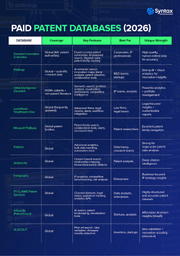
Top Paid Patent Databases (2026)
For deeper insights and professional use, paid patent databases offer advanced capabilities.
1. Derwent Innovation
What makes it powerful:
- High-quality curated patent data
- Enhanced abstracts for easy understanding
Best for: Corporates and R&D teams
2. Orbit Intelligence
What makes it powerful:
- Strong analytics and visualization tools
- Competitive intelligence features
Best for: Analysts and IP professionals
3. PatSnap
What makes it powerful:
- AI-driven insights
- Technology trend tracking
- Market intelligence
Best for: Startups and innovation teams
4. LexisNexis PatentSight
What makes it powerful:
- Patent valuation and benchmarking
- Business-focused insights
Best for: Strategic decision-makers

Free vs Paid Patent Databases
Free Patent Databases
- Cost: Free
- Features: Basic search and access
- Ease of Use: Beginner-friendly
- Insights: Limited analytics
Paid Patent Databases
- Cost: Subscription-based
- Features: Advanced tools and filters
- Ease of Use: Requires some learning
- Insights: Deep analytics and reports
If you’re just exploring, start free. If you’re working professionally, paid tools are worth it.
How Learning Patent Databases Can Boost Your Career
Knowing how to use patent research tools can make your profile stand out.
Key skills you develop:
- Research and analytical thinking
- Data interpretation
- Competitive intelligence
- Trend forecasting
These skills are highly valuable in:
- Data Analytics roles
- Product management
- Consulting
- Innovation strategy
In fact, many companies actively look for professionals who can combine data analysis with research skills—and patent data is a goldmine for both.
Learning how to work with data, analyze trends, and extract insights from sources like patent databases can be a game-changer. Structured programs like the Data Analytics course by Syntax Technologies can help you build these skills in a practical, job-ready way.
Conclusion: Your Gateway to Innovation and Career Growth
Patent databases are no longer niche tools—they’re becoming essential for anyone interested in innovation, technology, and future-ready careers.
From free patent databases for beginners to advanced paid patent analysis tools, there’s something for everyone. The key is to start exploring.
As AI, startups, and global competition continue to grow, the ability to understand and analyze innovation will set you apart.
So whether you’re researching your next idea, preparing for a career in data analytics, or simply curious about how inventions evolve—patent databases are your window into the future.
And in 2026, that’s a skill worth having.